
 (+65)67364142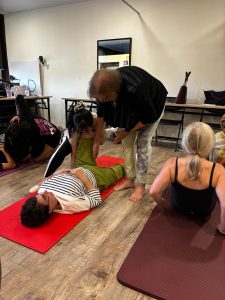
When people think of improving core strength, many often turn to generic fitness or Pilates classes. But there is a meaningful distinction when Pilates is physio-led – under the guidance of a physiotherapist rather than just a fitness instructor. In this article, we explore why physio-led Pilates elevates core strength, how it differs from conventional Pilates, and how Physio Asia’s exercise classes are constructed to maximize outcomes.
Core Strength: Definition, Importance, and Misconceptions
What is “core strength”?
Core strength refers to the functional integrity and control of the muscles around the trunk – including the deep abdominal muscles (transversus abdominis), multifidus, pelvic floor, internal obliques, diaphragm, and deeper spinal stabilizers. These muscles provide support for posture, movement, balance, and load transfer between the upper and lower limbs.
While many think “core” simply means “abs,” true core strength involves coordination, neuromuscular control, endurance, and integrated stabilization, not just superficial muscle bulk.
Why core strength matters
- Spine and back health: A strong core helps maintain proper spinal alignment and reduces stress on spinal discs and ligaments.
- Injury prevention: Good core control prevents compensatory movement patterns, reducing risk in daily activities and sports.
- Functional movement: Lifting, reaching, twisting, bending-every movement depends on stable force transfer via the core.
- Posture and balance: A stable core supports upright posture and helps balance reactions.
- Performance enhancement: Athletes often rely on core strength for power generation and efficient movement.
Common misconceptions
- That “more load = better core strength.” Overloading prematurely can cause compensations or injury.
- That a visible “six-pack” is synonymous with core strength (it’s not — appearance ≠ neuromuscular control).
- That core work is separate from full-body movement. In reality, core function should be integrated into all movement patterns.
Thus, when structuring core strength exercises, particularly in physio contexts, there must be emphasis on control, progression, and safety.
Physio vs Conventional Pilates: What Makes the Difference?
What is physio-led Pilates?
Physio-led Pilates merges the principles of classical or contemporary Pilates with deep anatomical, biomechanical, and rehabilitative knowledge of physiotherapy. According to a recognized source, physiotherapists can apply their anatomical insight to ensure each movement is safe, efficient, and tailored to individual biomechanics.
This approach is especially appropriate for individuals recovering from injury, living with chronic pain, or requiring corrective movement guidance.
Key differentiators
| Feature | Conventional Pilates Class | Physio-Led Pilates |
| Instructor background | Fitness / Pilates certification | Licensed physiotherapist (with clinical knowledge) |
| Assessment | Often minimal or generic | Detailed movement/biomechanics assessment |
| Customization | May be generalized class flow | Tailored modifications, regressions, and progressions |
| Safety oversight | One instructor managing many clients | Close attention to individual alignment, compensations |
| Rehabilitation value | More for general strengthening/flexibility | Can integrate rehab, corrective work, clinical progression |
Because of these differences, physio-led Pilates can elevate core strength more effectively, especially for those who need more precision, correction, and therapeutic oversight.
Inside Physio Asia’s Exercise Classes: Structure & Philosophy
Drawing from Physio Asia’s “Exercise Classes” page, here’s how their approach is shaped.
Foundational philosophy
- Core strength is explicitly named as the foundation of Pilates at Physio Asia.
- They emphasize that the deep, internal muscles of the abdomen and back must be engaged properly before superficial muscles take over.
- Their classes aim to build not just strength, but control, endurance, and movement quality.
Class segmentation and progression
- Introductory & assessment phase: New participants undergo movement screening or baseline assessment so the therapist can understand posture, imbalances, compensations, or previous injuries.
- Core activation & control: Early sessions often focus on teaching recruitment of the deep core (transversus abdominis, multifidus, pelvic floor) via low-load control drills (e.g. isometric holds, gentle bridging, breathing integration).
- Integration into functional movement: Once activation is stable, the class progresses to applying core strength to more complex multi-joint movements (limb reaches, single-leg work, dynamic transitions).
- Progressive loading & variation: Over time, resistance, range, tempo, and instability are introduced to challenge the core under safe constraints.
- Feedback, correction & cueing: The physiotherapist will continuously monitor alignment, compensatory motions, breathing, and offer hands-on or verbal correction.
Class sizes, equipment, and support
- Physio Asia often limits class sizes to allow individual attention.
- They may use Pilates props (reformers, stability balls, resistance bands) to vary stimulus while maintaining safety.
- Emphasis is placed on movement quality over quantity.
Benefits of Physio-Led Pilates for Core Strength
1. Safe and precise muscle activation
Because physiotherapists understand deep anatomy and compensatory patterns, they can guide you to recruit the correct core muscles without overusing superficial muscles. This reduces the risk of strain or faulty movement.
2. Individualized progression
Everybody is different. A class participant with prior low back pain or pelvic tilt will require specific adaptations. Physio-led Pilates ensures these nuances are addressed, which promotes steady, sustainable strength gains.
3. Correct compensations and imbalances
Many people unconsciously override weak core muscles by using stronger back or hip muscles. In physio-led classes, the therapist can detect and correct these compensations, ensuring balanced and safe progression.
4. Integration with rehabilitation goals
If someone is recovering from injury (e.g. spinal disc injury, pelvic floor dysfunction, postural syndrome), physio-led Pilates can dovetail with the overall rehabilitation plan. It’s not a generic fitness solution, but a therapeutic tool.
5. Enhanced motor control and proprioception
Physio-led Pilates emphasizes mindfulness, breath, and precise movement patterns. This enhances sensory feedback and the neuromuscular connection, which is critical for long-term core control under different postures and activities.
6. Longer retention and transfer to daily life
Because the emphasis is on quality, control strategies, and movement patterns, participants are more likely to carry these improvements into daily life – lifting, reaching, twisting – and maintain core integrity beyond the class session.
Conclusion
In summary, physio-led Pilates is not simply a variant of general Pilates; it is a refined, clinically informed approach that elevates core strength by integrating rehabilitation principles, corrective assessments, and individualized progression. Through precise activation, compensation correction, and functional integration, participants can develop deeper, more reliable core control that translates into everyday movement and injury resilience. Physio Asia Therapy Centre has long recognized this synergy. Since its establishment in 2006, Physio Asia has offered cost-effective, evidence-based physiotherapy and rehabilitation services, integrating state-of-the-art technology and skilful implementation. Their exercise classes, including physio-led Pilates, are anchored in this mission – blending clinical rigour with accessible, effective core strength interventions.