Relieve Wrist Pain with These Simple and Effective Exercises

Posted on |
Wrist pain relief showing inflamed wrist area highlighted in red to indicate discomfort and strain

Relieve Wrist Pain with These Simple and Effective Exercises

In an era where desk jobs and digital devices dominate our lives, wrist pain exercises have surged in popularity as a go-to solution for alleviating discomfort that affects millions worldwide. If you’re experiencing nagging wrist pain that hinders typing, lifting, or even basic hand movements, incorporating targeted exercises can be transformative. Backed by physiotherapy principles, these routines not only provide immediate relief but also build long-term resilience.

Decoding Wrist Pain: What It Means and Why It Happens

Wrist pain is more than just a fleeting ache; it’s often a signal of imbalance in the intricate network of bones, tendons, ligaments, and nerves that form the wrist joint. Defined as discomfort or soreness in the area connecting the forearm to the hand, it can range from mild irritation to debilitating sharpness, impacting grip and dexterity. Chronic wrist pain, persisting beyond a few weeks, typically arises when repetitive motions or poor ergonomics strain these structures, leading to inflammation or wear.

The wrist comprises eight small carpal bones arranged in two rows, supported by tendons for movement and ligaments for stability. When overloaded, this setup can falter, manifesting as pain that worsens with activity. Recognizing this early empowers proactive management through wrist pain exercises, which restore balance without invasive interventions.

Identifying Common Triggers of Wrist Discomfort

Pinpointing causes is crucial for effective relief. Repetitive strain injury (RSI) is a primary offender, often from prolonged keyboard use or assembly line work, inflaming tendons and causing conditions like tendinitis. Carpal tunnel syndrome (CTS) occurs when the median nerve is compressed in its narrow passageway, triggered by swelling from repetitive flexion. Arthritis, including osteoarthritis from age-related cartilage breakdown or rheumatoid arthritis from immune responses, erodes joint surfaces, leading to stiffness and swelling. Post-injury effects, such as from falls or sports, can also linger if healing is incomplete.

These triggers highlight why wrist pain exercises are essential, they address root issues like muscle weakness or tightness, preventing escalation into chronic problems.

Spotting Symptoms and Seeking Timely Diagnosis

Symptoms vary but commonly include throbbing pain during wrist movement, tenderness to touch, and reduced range of motion. You might notice swelling, a clicking sensation, or numbness extending to fingers, especially in CTS cases. Weakened grip strength can make holding objects challenging, affecting productivity and leisure.

Diagnosis involves a clinical evaluation: assessing pain patterns, testing nerve function with maneuvers like tapping the wrist, and possibly imaging to rule out fractures. Early detection through these steps ensures wrist pain exercises are tailored, maximizing efficacy and minimizing downtime.

The Power of Early Action in Wrist Pain Management

Acting swiftly can halt progression. Untreated pain may lead to compensatory overuse of other joints, like the elbow, or permanent nerve damage. Starting wrist pain exercises promptly, ideally under professional guidance, can reduce symptoms by up to 50% in initial weeks, fostering better posture and habits for sustained health.

Core Wrist Pain Exercises

Physiotherapy-inspired wrist pain exercises form a topic cluster of stretches, strengthens, and mobilizations. Perform them gently, 2-3 times daily, holding each for 20-30 seconds without forcing pain.

Flexibility-Focused Stretches

Begin with wrist flexor stretch: Extend your arm forward, palm up, and use the opposite hand to gently pull fingers back toward your body, feeling a pull along the inner forearm. This targets tight flexors common in desk workers. Conversely, the extensor stretch involves palm down, pulling fingers downward to elongate the top forearm muscles, easing RSI tension.

Strengthening Routines

Incorporate prayer stretch: Press palms together at chest level, elbows out, then lower hands toward waist while keeping palms connected, stretching wrist undersides. For power, try fist clenches: Start with hand open, slowly form a fist, hold, then release, repeat 10 times to boost grip without strain. Wrist curls using light weights (or a water bottle) involve palm-up forearm on a table, curling wrist upward, then lowering slowly for controlled strengthening.

Mobility Enhancers

Nerve glides for CTS: Extend arm, fingers straight, then bend wrist back while tucking thumb in, sliding the nerve to reduce compression. Circle wrists clockwise and counterclockwise to improve joint lubrication and range.

This cluster ensures balanced recovery, combining elements for comprehensive relief.

Advantages of Consistent Exercise Practice

Regular wrist pain exercises yield benefits like enhanced blood flow, reduced inflammation, and stronger supporting muscles, often leading to 70% symptom improvement per studies. They promote independence, cutting reliance on meds, and enhance overall upper body coordination.

Proactive Prevention for Lasting Wrist Wellness

Prevent pain by ergonomically adjusting workspaces, keep wrists neutral, use supportive tools, and integrate breaks with quick stretches. Maintain a nutrient-rich diet for joint health, and warm up before activities.

Wrapping Up: Your Path to Pain-Free Wrists

Embracing wrist pain exercises offers a straightforward, empowering route to relief, blending simplicity with proven results for everyday resilience. Commit to these routines, and watch discomfort fade.For expert guidance, Physio Asia Therapy Centre, established since 2006, provides cost-effective, evidence-based physiotherapy services with integration of state-of-the-art technology and skillful implementation. Their specialized programs can personalize your journey to optimal wrist health.

How Physiotherapy Can Help You Perform Better in Sports

Whether you are a professional athlete, a weekend runner, or someone passionate about fitness, performing at your best requires more than just training hard. It demands proper recovery, injury prevention, and body optimisation.

Sports physiotherapy is not only about treating injuries after they occur; it’s about maximising performance, preventing setbacks, and ensuring your body can consistently meet the demands of your sport. With millions of athletes worldwide turning to physiotherapy, research and experience both confirm that it plays a vital role in enhancing sports performance.

In this guide, we’ll explore the advantages of sports physiotherapy, how it works, the science behind it, and why every athlete, from beginners to elite performers, should make it part of their training routine.

Understanding Sports Physiotherapy

Sports physiotherapy is a specialised branch of physiotherapy that focuses on:

  • Injury prevention – Reducing risks by addressing weak points in the body
  • Rehabilitation – Helping athletes recover from sports-related injuries
  • Performance optimisation – Enhancing strength, flexibility, and endurance
  • Education and training – Teaching proper movement patterns and recovery strategies

Sports physiotherapists work closely with athletes, coaches, and doctors to design individualised programs that match the unique physical demands of a sport.

Why Sports Physiotherapy is Essential for Athletes

1. Injury Prevention—The Foundation of Longevity in Sports

Injuries are the biggest barriers to consistent athletic performance. Sports physiotherapists analyse biomechanics, muscle imbalances, and joint stability to identify potential risks before they turn into injuries.

How it helps:

  • Customised warm-up and cool-down routines
  • Strengthening weak muscle groups
  • Correcting poor posture or movement mechanics

Example: Runners prone to shin splints benefit from targeted calf strengthening and gait retraining, reducing recurrence significantly.

2. Faster Recovery from Sports Injuries

Despite precautions, injuries are part of sports. Physiotherapy accelerates healing by combining manual therapy, guided exercises, and advanced modalities like ultrasound or electrical stimulation.

Key recoveries supported by sports physiotherapy:

  • Ankle sprains
  • ACL (knee ligament) injuries
  • Shoulder impingement
  • Hamstring strains

Advantage: Faster return-to-play with reduced risk of re-injury.

3. Enhancing Flexibility and Range of Motion

Limited flexibility can compromise performance and increase the risk of injury. Sports physiotherapists use stretching techniques, mobility drills, and myofascial release to improve flexibility.

4. Improving Strength and Conditioning

Physiotherapists design strength training plans that go beyond general gym workouts. These programs target specific muscle groups that support athletic performance.

Example: For footballers, physiotherapy emphasises hamstring and hip strengthening to improve sprint speed and reduce muscle tears.

5. Optimising Movement and Technique

Sports performance depends heavily on proper biomechanics. Physiotherapists use video analysis and movement assessments to identify inefficiencies.

How it works:

  • Correcting running stride to improve efficiency
  • Refining golf swing mechanics to avoid shoulder strain
  • Optimising jump landing to protect knees in basketball or volleyball

Result: Better performance with reduced injury risk.

6. Boosting Recovery Through Advanced Modalities

Sports physiotherapy also uses modern therapeutic tools to speed recovery:

  • Cryotherapy: Reduces swelling and pain
  • Hydrotherapy: Improves circulation and joint movement
  • Electrical stimulation (TENS/EMS): Relieves pain and strengthens muscles
  • Shockwave therapy: Helps repair chronic injuries like tendonitis

These methods ensure athletes recover faster between training sessions and competitions.

7. Building Mental Resilience Through Education

Physiotherapy is not just physical; it’s psychological. Athletes often struggle with the frustration of injuries. Sports physiotherapists provide education, motivation, and structured recovery timelines, giving athletes confidence in their comeback.

Advantage: Improved focus, reduced stress, and a stronger mindset toward performance.

Key Areas of Sports Physiotherapy

1. Injury Prevention and Risk Reduction

  • Biomechanical analysis
  • Strengthening weak areas
  • Sport-specific conditioning

2. Rehabilitation and Recovery

  • Manual therapy
  • Customised exercise programs
  • Modalities like ultrasound, cryotherapy, or TENS

3. Performance Enhancement

  • Flexibility training
  • Core strengthening
  • Endurance conditioning

4. Athlete Education

  • Proper warm-up/cool-down routines
  • Posture and technique guidance
  • Nutrition and recovery advice

5. Return-to-Play Strategies

  • Gradual progression plans
  • Functional testing before competition
  • Mental preparation support

Sports That Benefit Most from Physiotherapy

Running and Athletics

  • Injury prevention for shin splints, IT band syndrome, and plantar fasciitis
  • Performance improvements through stride correction and strength training

Football and Rugby

  • Rehabilitation of ligament and hamstring injuries
  • Strengthening for explosive power and agility

Tennis, Badminton, and Racquet Sports

  • Shoulder stability and mobility exercises
  • Wrist and forearm strengthening to reduce strain

Swimming

  • Shoulder rehabilitation (rotator cuff injuries)
  • Flexibility and mobility training for smoother strokes

Basketball and Volleyball

  • Jump mechanics training to protect knees
  • Ankle stability exercises to prevent sprains

Long-Term Benefits of Sports Physiotherapy

Sports physiotherapy is not just for the short term—it helps athletes build sustainable careers.

  • Reduced injury downtime → more consistent training
  • Improved biomechanics → long-term joint health
  • Enhanced endurance and strength → better competition outcomes
  • Confidence and resilience → stronger mental approach to performance

Insight: Athletes who integrate physiotherapy regularly, not only during injury phases, often extend their careers and achieve peak performance consistently.

When to See a Sports Physiotherapist

You should consult a physiotherapist if you experience:

  • Persistent pain during or after exercise
  • Repeated sports injuries
  • Limited mobility or stiffness
  • Decreased performance despite training
  • Need for guidance on improving sport-specific techniques

Early intervention prevents small issues from becoming major injuries.

Conclusion

Sports physiotherapy is more than injury treatment; it’s a pathway to unlocking peak performance. By focusing on prevention, rehabilitation, biomechanics, and performance optimisation, physiotherapy empowers athletes to perform better, recover faster, and stay healthier for longer.

Whether you are an aspiring athlete or a seasoned professional, sports physiotherapy offers proven, science-backed benefits to enhance your physical abilities and protect your body from setbacks.

At Physio Asia Therapy Centre, we understand the unique demands athletes face. We are dedicated to providing efficient, effective, and evidence-based physiotherapy and rehabilitation services. Our expert physiotherapists design personalised sports recovery and performance plans tailored to your goals, helping you train harder, recover smarter, and perform at your very best.

Take the step toward better performance today- because in sports, every edge counts.

Top Tips for Fast Relief of Elbow Joint Pain

Elbow joint pain is a common and often debilitating condition that can significantly disrupt daily life, from simple tasks like lifting a coffee cup to engaging in a favorite sport. While the term “tennis elbow” is widely known, the reality is that this condition, medically termed lateral epicondylitis, and its counterpart, golfer’s elbow (medial epicondylitis), affect millions of people, many of whom have never stepped onto a court or a golf course. This article provides a detailed, professional, and compassionate guide to understanding, managing, and ultimately finding fast relief from elbow joint pain, ensuring you can regain function and comfort.

Understanding the Roots of Elbow Pain

The elbow is a complex hinge joint where three bones meet: the humerus in the upper arm and the radius and ulna in the forearm. It is stabilised by ligaments, surrounded by muscles, and powered by tendons. Pain in this joint is often a symptom of overuse and repetitive strain, leading to microscopic tears and inflammation in the tendons that attach to the bony bumps on either side of the elbow.

  • Tennis Elbow (Lateral Epicondylitis): This is the most common cause of elbow pain. It affects the tendons on the outer side of the elbow, specifically those that extend the wrist and fingers. Activities involving repetitive gripping, lifting, or twisting of the forearm can lead to this condition. While tennis players are susceptible, so are painters, carpenters, plumbers, and anyone who frequently uses a computer mouse or performs manual labor.
  • Golfer’s Elbow (Medial Epicondylitis): Less common than its counterpart, golfer’s elbow impacts the tendons on the inner side of the elbow, which are responsible for flexing the wrist. This condition is prevalent in golfers, pitchers, and individuals with jobs requiring repetitive wrist flexion and a strong grip.

The pain from both conditions can range from a dull ache to a sharp, burning sensation that radiates down the forearm. The goal of effective treatment is not only to provide fast relief but also to address the underlying cause to prevent recurrence.

Top Tips for Fast and Effective Elbow Joint Pain Relief

1. The R.I.C.E. Principle and Activity Modification

The first line of defense against acute elbow pain is often the R.I.C.E. principle: Rest, Ice, Compression, and Elevation.

  • Rest and Activity Modification: While complete rest is sometimes necessary, it is not always the best long-term solution. The key is modifying activities that trigger pain. This could mean adjusting your grip on a tool, using ergonomic equipment, or changing your technique during a sport. Rest allows the injured tendons to begin the healing process, but a gradual return to activity is essential to strengthen the area and prevent stiffness. For the first 48 hours after an injury, avoid movements that cause pain and give the elbow a break.
  • Ice Therapy: Applying an ice pack to the affected area for 15-20 minutes several times a day is highly effective in the first 48 hours. The cold temperature helps to constrict blood vessels, which reduces inflammation, swelling, and pain. Always wrap the ice pack in a towel to prevent skin damage.
  • Heat Therapy: After the initial inflammatory phase (typically 48 hours), switching to heat therapy can be beneficial. A warm compress or heat pad can help relax tight muscles, improve blood circulation to the area, and promote tissue healing. This is particularly useful for chronic elbow pain.
  • Compression: Using a compression sleeve or an elbow strap can provide support to the joint and help absorb some of the shock and strain during activity. A well-fitted brace can stabilise the muscles and tendons, reducing the load on the injured area.
  • Elevation: Elevating the elbow above the heart, particularly when resting, can help reduce swelling by encouraging fluid drainage.

2. Gentle Stretching and Targeted Exercises

While rest is important, immobility can lead to joint stiffness and muscle weakness. A program of gentle stretching and strengthening exercises, once approved by a healthcare professional, is vital for long-term recovery and prevention.

Stretching:

  • Wrist Extensor Stretch (for tennis elbow): With your arm extended in front of you, palm down, use your other hand to gently bend your wrist, pulling your hand toward your body. You should feel a stretch in your forearm. Hold for 20-30 seconds.
  • Wrist Flexor Stretch (for golfer’s elbow): With your arm extended, palm up, use your other hand to gently bend your wrist down, pulling your fingers toward your body. Hold for 20-30 seconds.

Strengthening:

  • Wrist Curls: Sit with your forearm resting on your knee or a table, palm up. Hold a light weight (a small dumbbell or even a soup can) and slowly curl your wrist up and down. Perform three sets of 10-15 repetitions.
  • Reverse Wrist Curls: Repeat the wrist curl exercise with your palm facing down.
  • Grip Strengthening: Squeeze a tennis ball or stress ball for 5-10 seconds and then release. Repeat 10 times.

These exercises should be performed without pain. If you feel any sharp pain, stop immediately.

3. The Role of Professional Physiotherapy

For persistent elbow pain that doesn’t improve with at-home care, seeking professional help is crucial. A qualified physiotherapist can accurately diagnose the cause of your pain and create a personalised treatment plan.

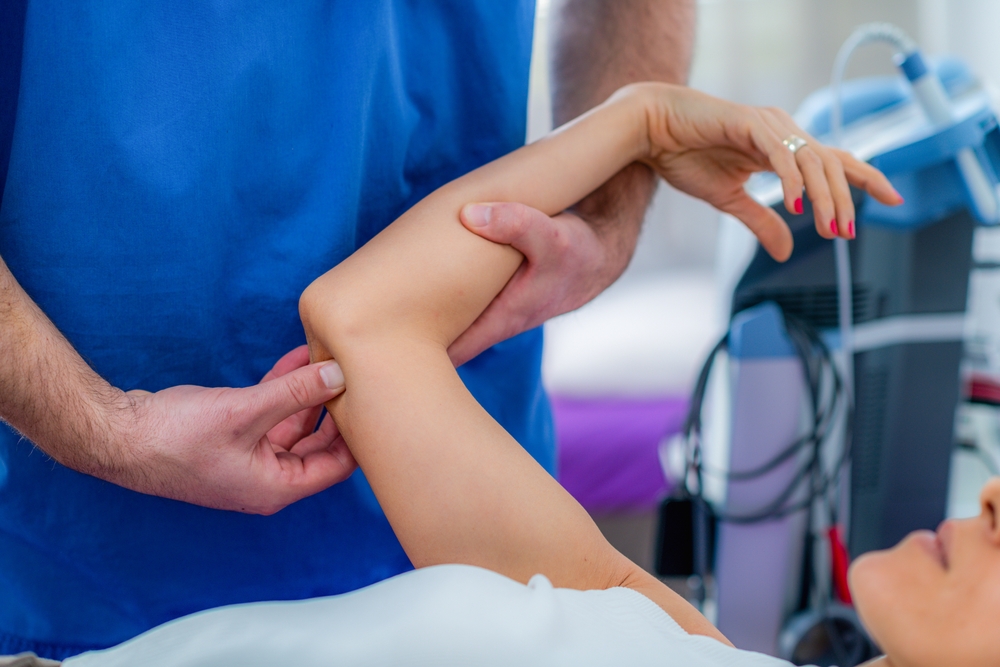
  • Manual Therapy: This can include massage, joint mobilisation, and soft tissue work to improve range of motion, reduce pain, and break down scar tissue.
  • Advanced Modalities: Physiotherapists may use various tools like shockwave therapy, which delivers sound waves to stimulate healing, or ultrasound therapy, which uses sound waves to increase blood flow and reduce pain.
  • Exercise Prescription: A professional can guide you through a safe and effective exercise program, ensuring you perform the movements correctly to strengthen the right muscles and prevent re-injury. They will also provide tailored advice on activity modification and ergonomic adjustments.

A professional’s expertise is invaluable, not just for treating the symptoms but for addressing the underlying biomechanical issues that led to the pain in the first place.

Conclusion: Your Path to a Pain-Free Life

Elbow joint pain, particularly from conditions like tennis elbow, can be a frustrating and limiting experience. However, with the right approach, including rest, ice/heat therapy, targeted exercises, and professional guidance, you can find lasting relief. Taking a proactive role in your recovery by modifying activities and strengthening the supporting muscles is key to preventing future episodes. Physio Asia Therapy Centre is an award-winning clinic dedicated to providing efficient, effective, and evidence-based physiotherapy and rehabilitation services in Singapore.

Outpatient Physiotherapy: Key Techniques and Modern Treatment Approaches

In the world of modern medicine, recovering from an injury, surgery, or chronic condition extends far beyond the hospital walls. It is a journey that requires sustained, expert guidance to restore function, alleviate pain, and rebuild strength. This is the domain of outpatient physiotherapy rehabilitation that offers a flexible and patient-centered pathway to full recovery. Unlike inpatient care, which is confined to a facility, outpatient physiotherapy empowers individuals to actively engage in their healing process while navigating the demands of daily life. This article explores the core techniques and innovative treatment approaches that define this essential form of rehabilitative care, highlighting how it serves as the bridge from recovery to a fully functional and active life.

The Foundational Pillars of Outpatient Physiotherapy

Effective outpatient physiotherapy is built on a comprehensive and evidence-based framework that integrates multiple techniques. While the specific plan is always tailored to the individual, the foundational pillars of treatment remain consistent, addressing both the symptoms and the root cause of a condition.

1. Manual Therapy

At the heart of many outpatient programs is manual therapy, a skilled, hands-on approach performed by the physiotherapist. This is where the practitioner uses their hands to assess and treat a patient’s musculoskeletal system. Techniques include:

  • Joint Mobilisation and Manipulation: Gentle, controlled movements applied to stiff or painful joints to restore range of motion and reduce pain. These techniques can help break down adhesions and improve joint fluid dynamics.
  • Soft Tissue Mobilisation: A form of therapeutic massage that targets muscles, tendons, and ligaments to release tightness, reduce swelling, and improve circulation.
  • Myofascial Release: A specialised technique that focuses on the fascia, a network of connective tissue that surrounds muscles. By applying sustained pressure, a therapist can release fascial restrictions that contribute to pain and limited mobility.

Manual therapy is not just about a temporary fix; it’s about preparing the body for the next crucial step: therapeutic exercise. By first releasing tension and improving joint mobility, the therapist creates an optimal environment for the patient to perform exercises more effectively and with less pain.

2. Therapeutic Exercise

Therapeutic exercise is the cornerstone of any rehabilitation program. It is a controlled physical stress applied to the body to improve strength, flexibility, coordination, and endurance. The types of exercises vary widely based on the patient’s condition and stage of recovery.

  • Range of Motion (ROM) Exercises: These are often the first step, designed to restore flexibility in a joint. They can be passive (the therapist moves the limb for the patient), active-assistive (the patient helps the therapist), or active (the patient performs the movement on their own).
  • Strengthening Exercises: As recovery progresses, the focus shifts to building muscle strength and stability. This may involve using resistance bands, light weights, bodyweight exercises, or specialised equipment.
  • Balance and Proprioception Training: Particularly for neurological or orthopedic conditions, exercises aimed at improving balance and the body’s awareness of its position in space are crucial for preventing falls and re-injury.
  • Gait Training: For patients recovering from lower limb injuries or neurological events, gait training involves a structured program to retrain walking patterns, improve stability, and restore a fluid, efficient stride.

The power of therapeutic exercise lies in its ability to be customised. A physiotherapist develops a personalised home exercise program, empowering patients to become active participants in their recovery, ensuring progress continues between clinic visits.

3. Therapeutic Modalities

Physiotherapists also utilise a range of physical agents or modalities to complement manual therapy and exercise. These devices apply external energy to the body to help manage pain, reduce inflammation, and promote healing.

  • Heat and Cold Therapy: Simple yet highly effective. Heat therapy (thermotherapy) is used to increase blood flow, relax muscles, and prepare tissues for exercise. Cold therapy (cryotherapy) is used to reduce inflammation and numb acute pain.
  • Electrotherapy: This involves using a mild electrical current to stimulate nerves or muscles. Common forms include TENS (Transcutaneous Electrical Nerve Stimulation) for pain relief and NMES (Neuromuscular Electrical Stimulation) to help re-educate weakened muscles and improve function.
  • Therapeutic Ultrasound: This modality uses high-frequency sound waves to generate deep heat, which can promote circulation, reduce muscle spasms, and accelerate healing in soft tissues.

The Patient-Centric Approach: Beyond Techniques

What truly defines the best outpatient physiotherapy is not just the techniques used, but the overall patient experience. The modern approach is a partnership, with the physiotherapist serving as a guide, educator, and motivator.

  • Holistic Assessment: A great physiotherapist looks beyond the immediate injury. They assess a patient’s posture, movement patterns, and lifestyle to identify the underlying factors that may have contributed to their condition. For instance, chronic back pain might stem from poor ergonomics at a desk, a weak core, or an old, unaddressed ankle injury.
  • Patient Education: A key goal of outpatient physiotherapy is to empower the patient with knowledge. By understanding the “why” behind their pain and the “how” of their exercises, patients are more likely to comply with their home program and make lasting lifestyle changes that prevent future problems.
  • Integration with Technology: Modern outpatient clinics are embracing technology to enhance care. Wearable devices can track a patient’s activity between sessions, providing valuable data for the physiotherapist. Telerehabilitation allows for remote consultations, making care more accessible for patients with mobility challenges or those in remote areas.

Tailoring Treatment: The Outpatient Specialist

The breadth of outpatient physiotherapy means that many clinics and therapists specialise in specific areas, ensuring a high level of expertise for complex conditions.

  • Orthopedic and Sports Rehabilitation: This specialisation focuses on injuries from sports or everyday activities, utilising advanced techniques like functional training and sport-specific drills to help athletes return to their game safely and at a peak performance level.
  • Neurological Physiotherapy: This is a vital field for patients recovering from a stroke, brain injury or living with conditions like multiple sclerosis. Therapists in this area use specialised techniques to retrain the brain and body, focusing on improving balance, coordination, and functional mobility.
  • Chronic Pain Management: Here, the focus is on a multifaceted approach that includes manual therapy, graded exercise, and extensive education on pain science, empowering patients to regain control over their lives without relying on medication.

Conclusion

Outpatient physiotherapy is far more than a simple series of exercises; it is a dynamic and essential component of the modern healthcare system. It is a field defined by its wide array of evidence-based techniques, from the hands-on expertise of manual therapy to the empowering practice of therapeutic exercise. By offering a personalised and holistic approach, outpatient physiotherapy serves as a crucial link between acute care and a patient’s return to independence and well-being. This is where rehabilitation truly comes to life, guiding individuals through their recovery journey and equipping them with the tools for a healthier, more active future.

Tennis Elbow

What is Tennis Elbow?

Tennis Elbow or Lateral Epicondylitis is defined as pain experienced in the outer side of elbow and/or in the forearm due to inflamed muscle tendons. It is an overuse injury which typically occurs due to repetitive wrist and arm motions including gripping or twisting motions. In this condition, the wrist extensor muscle group located close to the outer side of the elbow gets irritated and show signs of inflammation.

It does not necessarily affect only tennis players. Any person engaged in repetitive wrist motions can experience this pain. Females are more prone to this condition than males.

Physiotherapy for Tennis Elbow

Physiotherapy Management can include:

  • Pain relieving modalities like Tens and IFT,
  • Manual deep tendon release,
  • Graduated flexibility and strengthening protocol,
  • Joint mobilization,
  • Taping to facilitate/inhibit muscles,
  • Cryotherapy.

How can you self-manage Tennis Elbow?

  • Avoid aggravating wrist activities and apply ice and compression to your elbow,
  • Self-release the muscles on the outer side of elbow and forearm with a tennis ball. Slowly roll the ball (in transverse and circular motion) across the muscle belly on the outer side of elbow for 3-5mins. Repeat 2-3 times everyday
  • Wear a tennis elbow brace to protect and offload the tendons,
  • Follow a dedicated forearm and wrist muscle strengthening program designed by a physiotherapist,

Modify daily activities to limit condition progression

Some useful exercises to help relieve tennis elbow pain:

  1. Simple elbow and hand exercises

2. Active Elbow extensor stretch

3. Strengthening exercises

Elbow flexion: Begin with holding your arm close to body and later progress with shoulder in 90deg (as demonstrated)

Finger grip strengthening with a rubber band or hair tie.

Wrist flexion and extension with light resistance. Sit on a chair and support your arm on a table so that the wrist is hanging out. Hold the weight in your hand and slowly move it up and down. At home, instead of weights, you can use 0.5ml-1L water bottle as well.

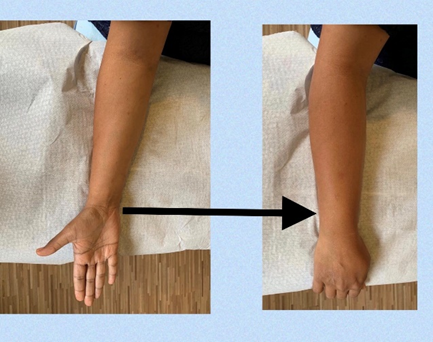
Forearm supination and pronation with light resistance- Bend your elbow to 90o and rotate your lower arm towards your waist and away from it while keeping the wrist steady.

Disclaimer:

These exercises are just a few examples and should be performed with caution.

Consult us today to get a thorough assessment and specialized treatment plan devised according to your needs.

Tips to manage tennis elbow

Tennis elbow or pain on outer side elbow of the elbow is the most common overuse injury in the elbow. Tennis elbow is also known as lateral epicondylitisHowever the condition is not restricted to tennis players. It can occur in anyone who does repeated movements leading to overuse of extensor tendon, such as people who spend considerable amount of time typing and using the mouse without proper positioning of the wrist.

Self management includes stretching of the forearm extensor muscles within the pain free range. Some of the simple stretches that can be done for tennis elbow are given here:

Forearm stretch using your other hand:

  • Make a closed fist with the thumb placed inside the fist.
  • Extend the wrist and place the other hand on the fist to apply overpressure.
  • Feel the stretch on the forearm muscles.
  • Hold for 5-10 seconds (as per tolerance), repeat 10 times in the day.

  • Forearm stretch:
  • Place both hands together as shown in the picture.
  • Try to bring the outer part of the hand together as much as possible, all the way from the wrist to the fingers.
  • Hold for 5-10 seconds (as per tolerance), repeat 10 times in the day.

  • Forearm stretch against the wall:
  • Place the back of your hand against the wall, such that it is at right angles to the wall.
  • Feel the stretch on the forearm muscles.
  • Hold for 5-10 seconds (as per tolerance), repeat 10 times in the day.

Forearm rotation:

  • Place your forearm at right angle to the arm.
  • Start with your palm facing upwards.

Turn the forearm such that the palm is facing downwards

Triceps stretch:

  • This stretch is done if you can feel the pain from the elbow going up into the back of the arm (into the triceps).
  • Keeping your elbow bent try to touch your upper back with the hand.
  • Use the other hand to apply additional stretch to the triceps.
  • Hold for 5-10 seconds (as per tolerance), repeat 10 times in the day.

Some other tips that can help to ease the pain and discomfort from tennis elbow are given below:

A good posture is vital to maintain the joints in neutral so that there is no excessive pressure on the joints. If you spend a considerable amount of time working on a computer, then use a mouse pad or ergonomic mouse so that your wrist is in neutral position (not bent upwards) while using a mouse.

Elbow brace can be used to alleviate pain by providing support to the muscles to stabilize the area.

Cold packs to settle the inflammation. Ice packs can help to minimize swelling around the elbow and reduce muscle spasm and pain.

If you participate in a racquet sport, check your racquet for a proper fit. Stiffer racquets and looser-strung racquets often can reduce the stress on the forearm, which means that the forearm muscles do not have to work as hard. Check the width of the racquet handle. If it is too thin it will lead to overgripping, leading to overuse of the extensor muscles.

Adequate warm up before and after exercise by gently stretching your elbow and arm muscles.

Our physiotherapists can help you to manage your tennis elbow and assist you with exercises to take care of any pain or complications arising from your tennis elbow. Call us for an appointment or send your queries to: info@physioasia.com